Single Phase vs Three Phase X-Ray Machine: Differences, Benefits
Introductions
Choosing the right X-Ray machine is essential for hospitals, nursing homes, diagnostic centres, and healthcare facilities. Apart from image quality and generator capacity, one important factor that buyers should understand is the electrical power configuration of the equipment.
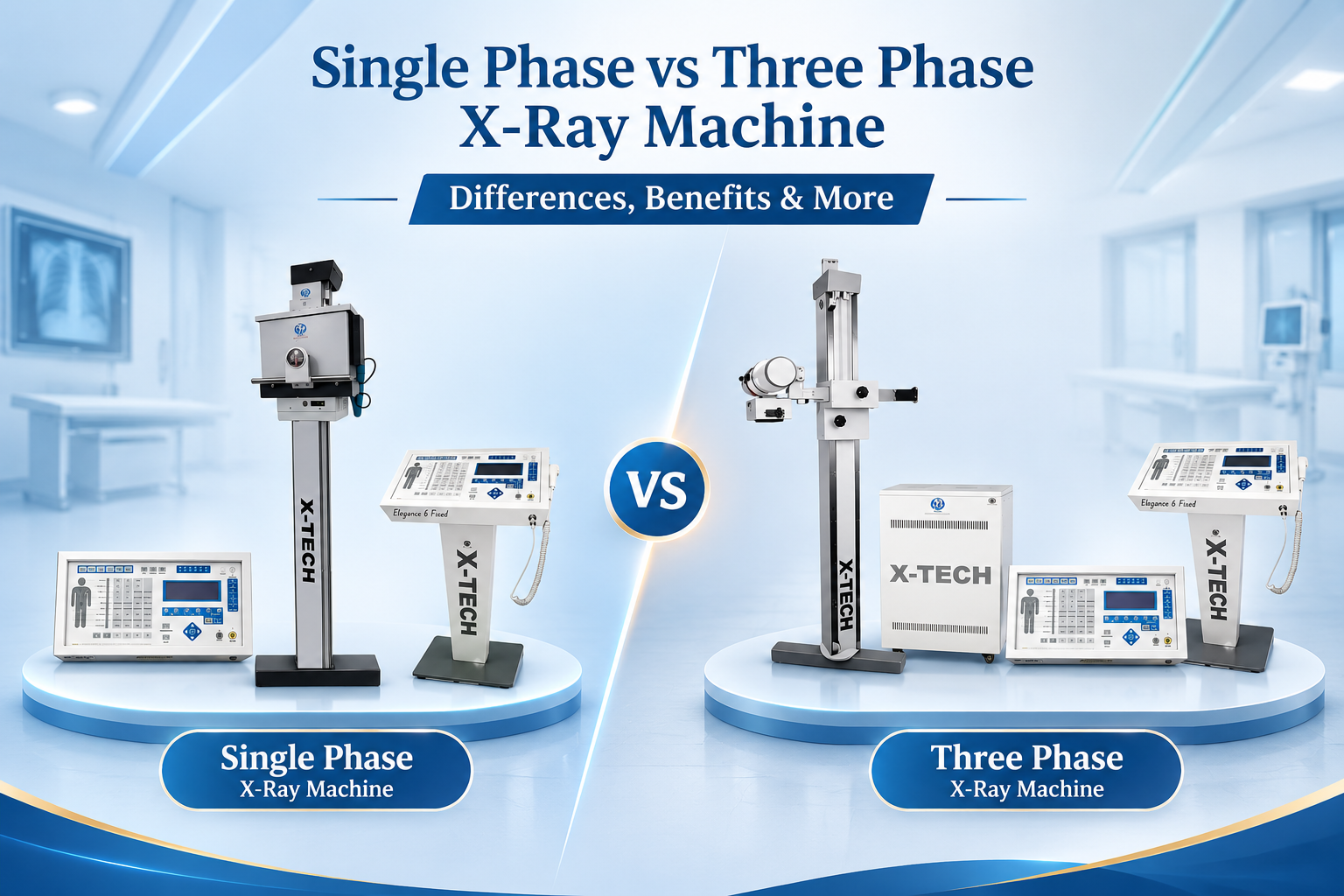
When exploring medical imaging equipment, you may come across two common configurations: 15kW Single Phase X-Ray Machines and 15kW Three Phase X-Ray Machines. Both are designed to generate X-rays for diagnostic imaging, but they differ in their electrical supply requirements, generator design, and suitability for particular installation environments.
Understanding the difference between a single-phase and three-phase X-ray machine can help healthcare providers make a more informed purchasing decision.
Whether you are setting up a new diagnostic centre, upgrading your existing radiology department, or planning to purchase a 15kW X-Ray Machine, this guide explains the major differences, advantages, applications, and important buying considerations.
What Is a Single Phase X-Ray Machine?
A single-phase X-ray machine is a medical imaging system designed to operate using a single-phase electrical power supply, subject to the machine’s specified voltage, current, and installation requirements.
These systems are commonly considered by smaller healthcare facilities, clinics, and diagnostic centres where the available electrical infrastructure and expected imaging workload are compatible with the equipment.
Modern high-frequency generator technology can also be used in single-phase X-Ray systems to provide controlled X-ray generation and support routine diagnostic imaging applications.
Benefits of a Single-Phase X-Ray Machine
Some important benefits include:
Suitable Electrical Configuration: Designed for facilities with an appropriate single-phase power supply.
Installation Flexibility: Can be considered where three-phase electrical infrastructure is unavailable, subject to the manufacturer’s specifications.
Routine Diagnostic Applications: Suitable configurations can support general radiographic examinations.
Infrastructure Planning: May simplify electrical planning in facilities that already have a suitable single-phase connection.
Practical for Smaller Facilities: Can be an option for clinics and diagnostic centres with compatible workloads and equipment requirements.
However, the actual performance depends on the generator, X-ray tube, exposure settings, and complete system configuration.
What Is a Three-Phase X-Ray Machine?
A three-phase X-ray machine operates using a three-phase electrical power supply. This configuration is commonly used in medical imaging equipment designed for higher power requirements and demanding radiology workloads.
Three-phase generator configurations can provide a more consistent electrical supply to the X-ray generator, depending on the generator design.
They are often considered for hospitals, larger diagnostic centres, and healthcare facilities that require equipment capable of handling their specified imaging workload.
Benefits of a Three-Phase X-Ray Machine
Key benefits may include:
Higher Power Configurations: Suitable for X-Ray systems designed around higher generator power requirements.
Consistent Generator Performance: Three-phase generator designs can provide more uniform electrical output.
Demanding Imaging Workloads: Can be appropriate for facilities with higher examination requirements, depending on the system specifications.
Hospital Applications: Suitable configurations can support the requirements of larger radiology departments.
Operational Efficiency: The right generator configuration can support the facility’s required examination workflow.
The final performance of a three-phase X-Ray system depends on its generator design, tube specifications, exposure parameters, and installation conditions.
Single Phase vs Three Phase X-Ray Machine: Key Differences
Understanding the differences between these two configurations is important before purchasing medical imaging equipment.
| Comparison Factor | Single Phase X-Ray | Three Phase X-Ray |
|---|
| Electrical Supply | Single-phase supply | Three-phase supply |
| Power Infrastructure | Compatible single-phase installation | Compatible three-phase installation |
| Generator Design | Depends on generator technology | Depends on generator technology |
| Power Configuration | Available in specified power ratings | Available in specified power ratings |
| Installation Planning | Requires single-phase electrical assessment | Requires three-phase electrical assessment |
| Applications | Depends on machine specifications and workload | Depends on machine specifications and workload |
| Selection | Based on facility requirements | Based on facility requirements |
Important: A single-phase or three-phase label alone does not determine image quality, radiation dose, or overall machine performance. The complete generator and tube specifications must be evaluated.
Which X-Ray Machine Is Better for Hospitals and Diagnostic Centres?
There is no universal answer because the right X-Ray machine depends on the healthcare facility’s infrastructure, patient volume, clinical applications, and equipment requirements.
1. For Small Clinics and Nursing Homes
Smaller healthcare facilities should evaluate their electrical infrastructure, available installation space, and expected number of examinations.
A suitable single-phase X-ray machine may be considered when its technical specifications match the facility’s requirements.
2. For Diagnostic Centres
Diagnostic centres should consider their daily patient volume, types of examinations, required generator capacity, and future expansion plans.
Both single-phase and three-phase configurations may be suitable depending on the equipment specifications and operational requirements.
3. For Hospitals
Hospitals with dedicated radiology departments should evaluate their expected workload and electrical infrastructure before selecting an X-Ray machine.
A three-phase X-ray machine may be considered for installations requiring compatible higher-power configurations and demanding operational workloads.
The final decision should always be based on the complete technical specifications rather than the phase configuration alone.
Understanding 15kW Single Phase and 15kW Three Phase X-Ray Machines
When comparing medical imaging equipment, buyers may also encounter 15kW Single Phase and 15kW Three Phase X-Ray Machines.
Although both systems have a nominal generator power rating of 15kW, their electrical supply and generator configurations can differ.
Before purchasing either system, healthcare providers should evaluate:
Input voltage and frequency requirements.
Maximum input current and electrical load.
Generator technology and output characteristics.
X-Ray tube specifications.
kV and mA operating ranges.
Exposure time and duty cycle.
Available electrical infrastructure.
Installation and maintenance requirements.
A 15kW rating alone does not establish that two different machines will deliver identical performance.
Consulting the manufacturer’s technical specifications is essential to determine which configuration is appropriate for a particular healthcare facility.
Important Factors to Consider Before Buying an X-Ray Machine
Apart from the phase configuration, several other factors influence the performance and suitability of medical imaging equipment.
1. Generator Capacity
Generator capacity is an important factor when selecting an X-Ray machine. Healthcare facilities should evaluate the power rating according to their examination requirements and expected workload.
2. X-Ray Tube Specifications
The X-Ray tube plays an important role in image generation. Buyers should evaluate tube specifications, focal spot options, heat capacity, and operating limits.
3. Image Quality
Image quality depends on several factors, including generator performance, detector technology, exposure parameters, image processing, and system configuration.
For digital imaging applications, the detector and image processing workflow should also be considered.
4. Electrical Infrastructure
Before purchasing an X-Ray machine, check the available electrical supply, voltage stability, wiring capacity, earthing, protective devices, and other installation requirements.
A qualified electrical professional should verify that the existing infrastructure is suitable for the selected machine.
5. Radiation Safety and Regulatory Requirements
Radiation safety is an essential consideration when purchasing and installing medical X-Ray equipment in India.
Healthcare facilities should ensure that the equipment and installation comply with applicable Atomic Energy Regulatory Board (AERB) requirements.
This includes applicable equipment approvals, installation layout, shielding, licensing, and quality assurance procedures.
Official guidelines are available through the AERB website.
6. Installation and After-Sales Support
A reliable medical equipment manufacturer should provide appropriate installation assistance, technical guidance, maintenance support, and access to spare parts.
After-sales service is particularly important because equipment downtime can affect the daily operations of a diagnostic centre or hospital.
Why Choose X-Tech Medical Systems for X-Ray Machines?
X-Tech Medical Systems Pvt. Ltd. is an Indian medical imaging equipment manufacturer based in Kolkata, West Bengal, offering X-Ray machines, Digital Radiography Systems, C-Arm Machines, and Radiology Accessories for hospitals, clinics, and diagnostic centres.
The company offers different X-Ray machine configurations, including 15kW Single Phase and 15kW Three Phase systems, helping healthcare providers explore equipment according to their electrical infrastructure and imaging requirements.
Our Medical Imaging Solutions Include:
Digital X-Ray Machines
15 kW Single-Phase X-Ray Machines
15 kW Three-Phase X-Ray Machines
6kW X-Ray Machines
32kW and 40kW X-Ray Machines
100mA, 300mA and 500mA X-Ray Machines
C-Arm X-Ray Machines
DR Systems
X-Ray Machine Accessories
With a focus on product quality, technical guidance, installation, and after-sales assistance, X-Tech Medical Systems aims to support healthcare facilities looking for dependable medical imaging solutions.
If you are searching for a reliable X-Ray Machine Manufacturer in Kolkata or X-Ray Machine Manufacturer in India, you can contact X-Tech Medical Systems to discuss your requirements.
Conclusion:
Both Single Phase and Three Phase X-Ray Machines have their own applications and installation requirements. The right choice depends on the available electrical infrastructure, generator specifications, expected patient volume, and clinical requirements of the healthcare facility.
While a Single Phase X-Ray Machine may be appropriate for facilities with compatible power infrastructure and workload requirements, a Three Phase X-Ray Machine can be considered for installations requiring suitable higher-power configurations.
Before making a purchase, always compare the complete technical specifications, installation requirements, radiation safety considerations, and after-sales support.
X-Tech Medical Systems Pvt. Ltd. offers different medical imaging solutions, including 15 kW single-phase and three-phase X-ray machines, for healthcare providers across India.
Looking for the right X-Ray Machine for your hospital or diagnostic centre?
Contact X-Tech Medical Systems Pvt. Ltd. today to explore available models, discuss your technical requirements, and request a customised quotation.
Website: https://xraymachines.in/
Phone: +91 9883349060
Location: Kolkata, West Bengal, India
What People Mostly Asked?