How Does a C-Arm Machine Work? A Complete Guide for Hospitals
Introductions
A C-Arm Machine is an important medical imaging system used in hospitals, surgical centres and other healthcare facilities where real-time X-Ray imaging is required during medical procedures. Its unique C-shaped design allows the X-Ray source and image receptor to work together while the system can be positioned around the patient.
Unlike conventional fixed X-Ray systems that are generally used to capture images for diagnostic examination, a C-Arm is designed to provide imaging support during procedures. This makes it particularly useful in areas such as orthopaedics, pain management, vascular procedures, trauma care and image-guided surgery.
For hospitals planning to purchase a C-Arm system, understanding how a C-Arm machine works, its major components, applications and benefits can help in making an informed equipment decision.
X-Tech Medical Systems Pvt. Ltd. is a manufacturer and supplier of medical imaging equipment, offering C-Arm systems and other X-Ray solutions for hospitals, clinics and healthcare facilities.
What Is a C-Arm Machine?
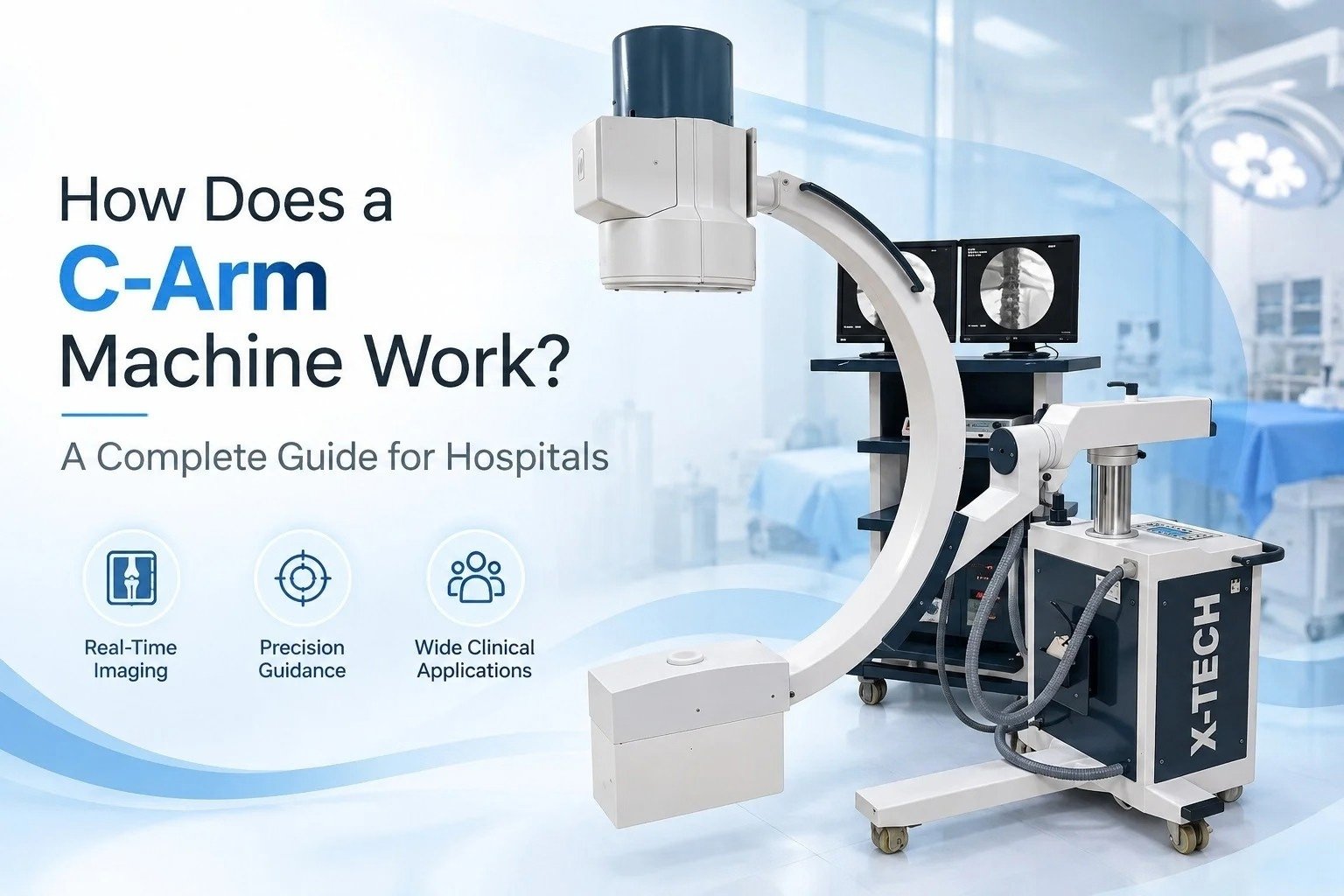
A C-Arm is a specialised mobile X-Ray imaging system named after its C-shaped arm. The design allows the X-Ray tube and image receptor to be positioned around the patient from different angles.
The system typically consists of an X-Ray generator, X-Ray tube, image receptor, C-shaped arm, control unit, display monitor and mobile base.
One of the key advantages of a C-Arm is its ability to provide imaging during a procedure. Medical professionals can use the generated images to help visualise anatomical structures and guide specific procedures.
Because the system is mounted on a mobile platform, it can generally be moved and positioned according to the requirements of the procedure and operating room.
How Does a C-Arm Machine Work?
The basic working principle of a C-Arm is based on X-Ray generation and image acquisition.
The process can be understood in a few simple steps.
X-Ray Generation
The X-Ray generator supplies electrical energy to the X-Ray tube.
Inside the tube, electrons are accelerated toward a target material. When the electrons interact with the target, X-Rays are produced.
The generated X-Ray beam is directed toward the patient’s body.
X-Rays Pass Through the Patient
Different tissues in the human body absorb X-Rays at different rates.
Dense structures such as bones absorb more X-Rays, while softer tissues generally allow more X-Rays to pass through.
This difference in X-Ray absorption creates the information required to produce an image.
Image Receptor Captures the Image
After passing through the patient, the X-Rays reach the image receptor located opposite the X-Ray tube.
Depending on the C-Arm configuration, the system may use an image intensifier or a digital flat-panel detector.
The receptor converts the incoming X-Ray information into an image that can be displayed on the monitor.
Image Processing
The captured information is processed electronically by the imaging system.
Modern digital C-Arm systems can provide processed images on a connected display, allowing the medical team to view the anatomy during the procedure.
Real-Time Imaging
One of the major purposes of a C-Arm is to support imaging during procedures.
The C-shaped arm can be repositioned to obtain images from different angles, depending on the clinical requirement.
This ability to change the imaging angle makes the C-Arm particularly useful for image-guided procedures.
Main Components of a C-Arm Machine
A C-Arm consists of several integrated components that work together to produce medical images.
X-Ray Tube
The X-Ray tube generates the X-Rays required for imaging.
Its performance and specifications are important factors when evaluating a C-Arm system.
X-Ray Generator
The generator supplies the required electrical power to the X-Ray tube.
Generator specifications can vary between different C-Arm models and applications.
C-Shaped Arm
The C-shaped arm connects and supports the X-Ray tube and image receptor.
Its design allows the system to move around the patient and obtain images from different positions.
Image Receptor
The image receptor captures X-Ray information after it passes through the patient.
Modern systems may use digital flat-panel detector technology for digital image acquisition.
Monitor
The monitor displays the captured images to the medical team.
Depending on the system configuration, C-Arms may include one or more high-resolution displays.
Mobile Base
The mobile base allows the C-Arm to be positioned within the operating or procedure room.
Mobility is one of the defining characteristics of a mobile C-Arm system.
Control System
The control interface allows authorised operators to manage imaging parameters and system functions according to the equipment configuration and procedure requirements.
What Are C-Arm Machines Used For?
C-Arm systems are used in a variety of medical procedures where X-Ray imaging can support the clinical workflow.
Some common applications include:
Orthopaedic Procedures
C-Arms are widely used in orthopaedic procedures where imaging can help medical professionals visualise bones and positioning during treatment.
Applications may include fracture management, implant positioning and other orthopaedic procedures.
Trauma and Emergency Procedures
In trauma care, a mobile imaging system can be useful when imaging needs to be performed within an operating or procedure environment.
Pain Management Procedures
C-Arms may also be used during selected pain management procedures where imaging guidance is required.
Spinal Procedures
Image guidance can assist clinicians during certain spinal procedures by providing views of the relevant anatomical structures.
Vascular and Other Image-Guided Procedures
Depending on the system configuration and clinical environment, C-Arms can support various image-guided procedures requiring X-Ray imaging.
The exact clinical use should always be determined by qualified medical professionals according to the procedure and applicable clinical protocols.
Benefits of Using a C-Arm Machine in Hospitals
A C-Arm can provide several practical advantages for hospitals and surgical facilities.
Real-Time Imaging Support
C-Arms can provide imaging during procedures, helping clinicians visualise relevant anatomy without necessarily moving the patient to a separate fixed X-Ray room.
Mobile Design
The mobile configuration allows the system to be moved and positioned according to the requirements of the operating or procedure room.
Multiple Imaging Angles
The C-shaped design allows the X-Ray tube and detector to be positioned around the patient, supporting imaging from different angles.
Improved Procedure Workflow
Having imaging equipment available within the procedure environment can help integrate imaging into the workflow.
Versatile Applications
C-Arms can be used across multiple clinical areas, including orthopaedics, trauma, pain management and other image-guided procedures.
What Should Hospitals Consider Before Buying a C-Arm?
Selecting a C-Arm Machine requires careful evaluation of the hospital’s clinical and operational requirements.
Image Quality
Hospitals should evaluate the image acquisition and processing capabilities of the system according to their intended applications.
Generator Capacity
The generator should be appropriate for the intended clinical applications and expected workload.
Detector Technology
Hospitals can evaluate whether a system with a digital flat-panel detector or another imaging configuration is appropriate for their requirements.
C-Arm Movement
The range of movement and positioning capabilities are important considerations, particularly for surgical applications.
Display Configuration
The monitor configuration should provide a practical viewing experience for the medical team.
Mobility
Since C-Arms are commonly used in operating rooms and procedure areas, the mobility and positioning of the system should be considered.
Installation and Room Requirements
Hospitals should evaluate the available space, electrical infrastructure and other installation requirements before purchasing the equipment.
Technical Support
After-sales service, maintenance, technical assistance and availability of spare parts are also important factors when selecting a C-Arm manufacturer or supplier.
Why Choose an Experienced C-Arm Machine Manufacturer?
A C-Arm is a specialised medical imaging system, so choosing an experienced manufacturer or supplier is an important part of the purchasing process.
Hospitals should evaluate not only the machine specifications but also the manufacturer’s ability to provide:
- Product guidance
- Technical consultation
- Installation support
- Operator training
- Maintenance assistance
- Spare parts support
- After-sales service
A reliable manufacturer can help healthcare facilities select an appropriate C-Arm configuration according to their intended applications and infrastructure.
X-Tech Medical Systems Pvt. Ltd. – C-Arm Machine Manufacturer & Supplier
X-Tech Medical Systems Pvt. Ltd. is a medical imaging equipment manufacturer and supplier providing X-Ray solutions for hospitals, diagnostic centres, clinics and healthcare facilities.
Our product portfolio includes C-Arm Machines, Digital X-Ray Machines, DR Systems, Mobile X-Ray Machines and other X-Ray equipment and accessories.
As a manufacturer and supplier, X-Tech Medical Systems focuses on providing suitable equipment configurations based on the requirements of healthcare facilities.
When selecting a C-Arm, our team can assist customers in understanding equipment specifications, applications and installation requirements so that they can choose a system appropriate for their facility.
If your hospital, surgical centre or healthcare facility is looking for a C-Arm Machine manufacturer and supplier in India, X-Tech Medical Systems can help you explore suitable medical imaging solutions.
Conclusion
A C-Arm Machine combines X-Ray generation, image acquisition and mobile positioning into a system designed to support image-guided medical procedures.
Its C-shaped design allows the X-Ray tube and image receptor to be positioned around the patient, while the imaging system provides images that can assist medical professionals during various procedures.
For hospitals and surgical facilities, selecting the right C-Arm requires consideration of clinical applications, image quality, system configuration, mobility, installation requirements and long-term technical support.
X-Tech Medical Systems Pvt. Ltd., as a C-Arm Machine manufacturer and supplier, provides medical imaging solutions for healthcare facilities looking for reliable and application-focused X-Ray equipment.
If you are planning to purchase a C-Arm Machine for your hospital, surgical centre or healthcare facility, consult with an experienced manufacturer to determine the most suitable configuration for your requirements.
What People Mostly Asked?