
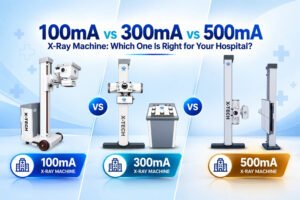
100mA vs 300mA vs 500mA X-Ray Machine: Which One Is Right for Your Hospital?
Choosing the right X-Ray machine is an important decision for hospitals, nursing homes and diagnostic centres.
X-Tech Medical Systems Pvt. Ltd.

Choosing the right X-Ray machine Manufacturer in Kolkata for a hospital, clinic, or diagnostic centre is an important decision. A reliable X-Ray system can improve diagnostic workflow, image quality, patient care, and overall operational efficiency. However, with different types of X-Ray machines, power configurations, digital radiography systems, and mobile solutions available in the market, selecting the right equipment can be challenging.
Whether you are setting up a new diagnostic centre, upgrading an existing radiology department, or replacing an older X-Ray system, it is important to understand your clinical requirements, available space, expected patient volume, image quality requirements, and long-term service needs.
In this guide, we will discuss the major factors you should consider before purchasing an X-Ray Machine Manufacturer for your hospital or diagnostic centre.
An X-Ray machine is a medical imaging system that uses controlled X-ray radiation to create images of internal structures of the human body. X-Ray imaging is widely used for examining bones, chest conditions, joints, and several other diagnostic applications.
Modern healthcare facilities increasingly prefer digital imaging technologies because they can provide faster image acquisition, convenient image storage, and efficient workflow compared with traditional film-based systems.
Because digital radiography greatly increases efficiency while lowering radiation exposure, it has emerged as the primary imaging option for hospitals, diagnostic centers, orthopedic clinics, emergency rooms, and other healthcare facilities. Digital technologies are perfect for contemporary healthcare institutions because they facilitate image storage, remote sharing, and connection with hospital information systems.
Different healthcare facilities have different imaging requirements. Therefore, choosing the right type of X-Ray machine is essential.
A Digital X-Ray Machine is designed to capture X-Ray images electronically and integrate digital imaging into the diagnostic workflow.
Digital X-Ray systems are suitable for hospitals, clinics, and diagnostic centres looking for efficient image acquisition, improved workflow, and convenient digital image management.
Fixed X-Ray machines are generally installed in dedicated radiology rooms. They are suitable for healthcare facilities that require regular and high-volume X-Ray examinations.
Depending on the facility’s requirements, different power configurations can be considered for different applications.
A Mobile X-Ray Machine provides flexibility when imaging needs to be performed outside a conventional radiology room.
Mobile systems can be useful in hospitals where patients may have limited mobility or when X-Ray examinations are required in different departments.
A C-Arm X-Ray Machine is designed for applications where real-time X-Ray imaging and flexible positioning are required.
C-Arm systems are commonly considered for hospitals and healthcare environments where image guidance is required during various procedures.
Digital Radiography (DR) Systems are designed to provide digital image acquisition and can help healthcare facilities streamline their radiology workflow.
When selecting a DR system, hospitals should consider detector technology, image quality, workflow requirements, compatibility, service support, and future scalability.
Buying an X-Ray machine should not be based only on price. The equipment should match the operational and clinical requirements of the healthcare facility.
Here are some important factors to evaluate:
Image quality is one of the most important considerations when selecting medical imaging equipment.
A good X-Ray system should provide clear and detailed images that support healthcare professionals during diagnostic evaluation. Factors such as detector technology, image processing, system configuration, and overall equipment quality can influence imaging performance.
X-Ray machines are available in different power configurations. The appropriate configuration depends on the intended application, patient volume, installation environment, and workload.
Before purchasing, evaluate your expected daily workload and the types of examinations your facility will perform.
Modern digital imaging can help healthcare facilities manage images more efficiently.
When evaluating a Digital X-Ray or DR system, consider:
A well-planned digital workflow can help reduce unnecessary delays in the radiology department.
Radiation safety should always be a priority when installing and operating X-Ray equipment.
The X-Ray system should be installed and operated according to applicable regulatory and safety requirements. Proper room planning, shielding, equipment configuration, trained personnel, and appropriate protective accessories are important parts of a safe radiology environment.
Healthcare facilities may also require radiation protection accessories such as lead aprons, thyroid guards, lead goggles, and lead glass depending on their specific setup and requirements.
Before purchasing an X-Ray machine, check the available room size, electrical requirements, equipment placement, workflow, and other installation considerations.
A professional installation process can help ensure that the equipment is properly configured and ready for operation.
An X-Ray machine is a long-term investment, so after-sales service should be considered before making a purchase.
Look for a manufacturer that can provide:
Reliable support can help reduce equipment downtime and maintain consistent radiology operations.
Selecting an experienced X-Ray Machine Manufacturer in India can make a significant difference to the overall purchasing experience.
A reliable manufacturer should understand the requirements of hospitals, diagnostic centres, and clinics and should be able to recommend an appropriate system based on the facility’s needs.
The right manufacturer should ideally provide support throughout the equipment lifecycle, from product selection and installation to training, maintenance, and technical assistance.
X-Tech Medical Systems Pvt. Ltd. is an Indian medical imaging equipment manufacturer offering X-Ray and C-Arm solutions for hospitals, clinics, and diagnostic centres.
The company offers various systems including Digital X-Ray Machines, DR Systems, C-Arm X-Ray Machines, Fixed X-Ray Machines, Mobile X-Ray Machines, and X-Ray Machine Accessories.
Its product range includes different X-Ray machine configurations such as 6kW, 15kW, 32kW, 40kW, 100mA, 300mA, and 500mA systems. The company also highlights installation, technical guidance, and after-sales support for healthcare facilities across India.
When investing in medical imaging equipment, healthcare providers need more than just a machine. They need dependable technology, professional support, and a manufacturer they can work with over the long term.
X-Tech Medical Systems focuses on:
Modern X-Ray and digital radiography solutions designed to support efficient medical imaging workflows.
From X-Ray machines and C-Arm systems to radiology accessories, healthcare facilities can explore multiple imaging solutions from one manufacturer.
Professional installation, technical guidance, and after-sales support can help healthcare facilities operate their imaging equipment efficiently.
Medical imaging equipment requires precision, consistency, and dependable performance. Choosing a manufacturer with a focus on quality control and engineering can provide greater confidence over the equipment’s operational life.
There is no single X-Ray machine that is perfect for every healthcare facility.
The right choice depends on several factors, including:
For example, a diagnostic centre with a dedicated radiology room may consider a fixed Digital X-Ray or DR system, while a hospital requiring imaging flexibility may consider a mobile X-Ray solution. Facilities requiring image-guided procedures may need a C-Arm system.
Therefore, it is always recommended to discuss your requirements with an experienced medical imaging equipment manufacturer before finalizing a system.
Choosing the right X-Ray machine for a hospital or diagnostic centre is an important long-term investment. Instead of focusing only on the initial purchase price, healthcare providers should evaluate image quality, machine configuration, digital workflow, radiation safety, installation requirements, reliability, and after-sales support.
A reliable X-Ray Machine Manufacturer in India can help healthcare facilities select an imaging solution according to their clinical requirements, available infrastructure, and future needs.
If you are planning to purchase a Digital X-Ray Machine, DR System, Mobile X-Ray Machine, Fixed X-Ray Machine, C-Arm X-Ray Machine, or X-Ray accessories, consulting with an experienced manufacturer can help you make a more informed decision.
The best X-Ray machine depends on the hospital’s patient volume, clinical applications, available space, required workflow, and budget. Digital X-Ray, DR, fixed, mobile, and C-Arm systems can serve different healthcare requirements.
A Digital X-Ray Machine captures X-Ray images electronically and supports a digital radiology workflow. It can help healthcare facilities manage image acquisition and workflow more efficiently.
Consider the manufacturer’s product range, technical expertise, quality practices, installation support, service network, spare parts availability, warranty, and after-sales support before making a decision.
Yes. X-Ray systems are available in different power configurations depending on the model and intended application. The appropriate configuration should be selected according to the healthcare facility’s workload and requirements.
Yes. X-Tech Medical Systems highlights professional installation, technical guidance, and after-sales support for its medical imaging equipment.
Choosing the right X-Ray machine is an important decision for hospitals, nursing homes and diagnostic centres.
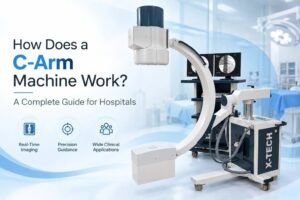
A C-Arm Machine is an important medical imaging system used in hospitals, surgical centres and other healthcare facilities where real-time X-Ray imaging is required during medical procedures.

If you are planning to purchase an X-ray machine for a hospital, diagnostic centre, nursing home, clinic or radiology department, one of the first questions you may have is: What is the cost of an X-ray machine in West Bengal, India?