Digital X-Ray Machine vs Conventional X-Ray Machine: Key Differences, Benefits & Applications
X-ray imaging is one of the most widely used diagnostic imaging technologies in hospitals, clinics, and diagnostic centres. With advancements in medical technology, Digital X-Ray Machines have become an important part of modern radiology, offering faster image acquisition and a more efficient digital workflow.
However, conventional X-ray systems are still used in many healthcare facilities. Understanding the difference between digital and conventional X-ray systems can help hospitals and diagnostic centres select equipment according to their clinical requirements, workflow, and infrastructure.
What Is a Digital X-Ray Machine?
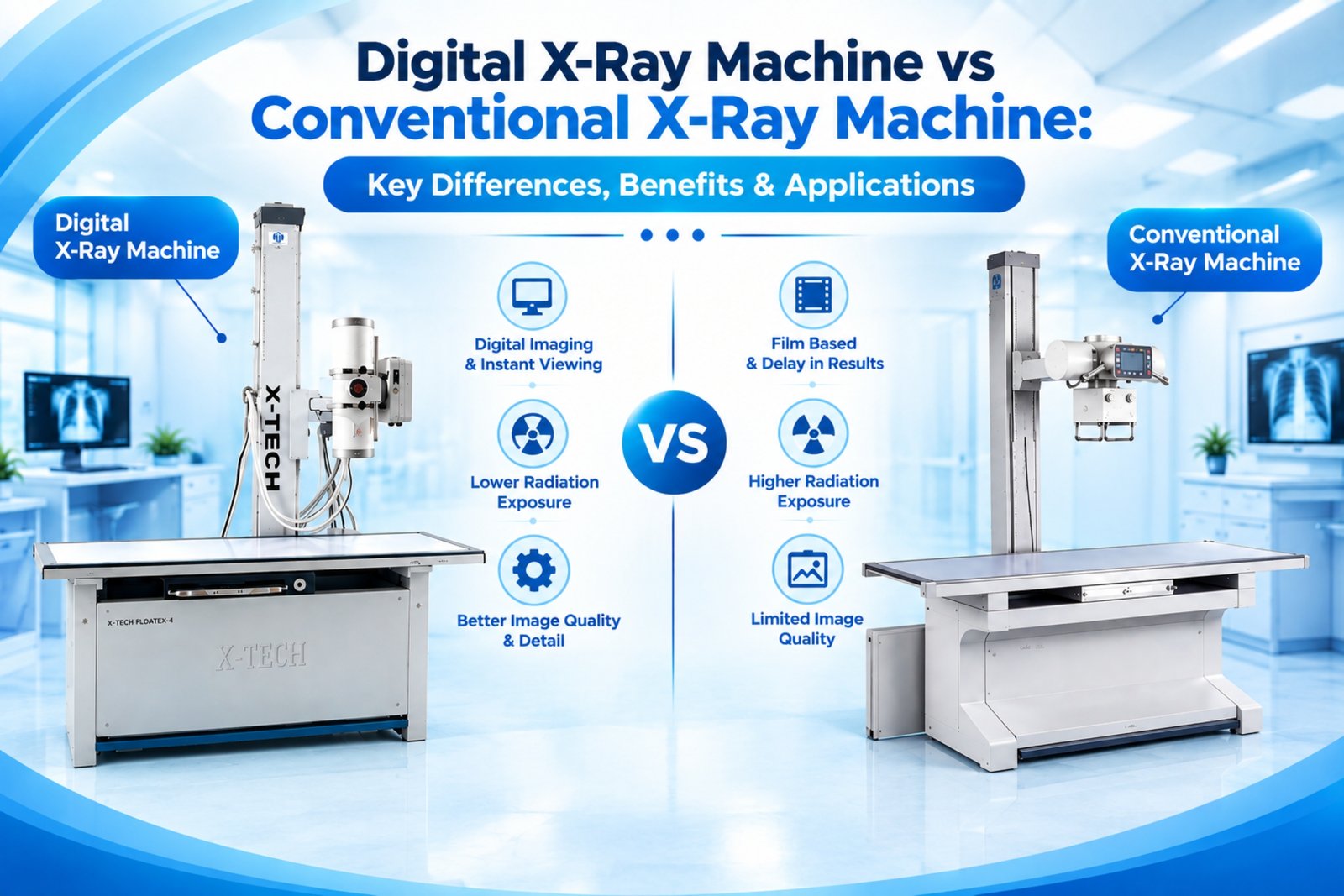
A Digital X-Ray Machine captures X-ray images electronically using a digital detector instead of traditional film. The acquired images can be viewed on a computer or workstation and can be stored, transferred, and managed digitally.
Modern digital radiography systems are designed to support efficient imaging workflows in hospitals, clinics, and diagnostic centres.
What Is a Conventional X-Ray Machine?
A conventional X-ray system traditionally uses X-ray film or cassette-based image acquisition. After exposure, the image requires additional processing before it can be viewed.
Although conventional systems have been widely used for decades, healthcare facilities looking for faster digital workflows may consider upgrading to digital radiography solutions.
Digital X-Ray vs Conventional X-Ray: Key Differences
1. Image Acquisition
Digital X-Ray Machines capture images electronically through a digital detector, allowing images to be viewed quickly.
Conventional systems generally require film or cassette processing before the image becomes available.
2. Workflow
Digital radiography can simplify the imaging workflow by reducing manual film-processing steps. Images can be reviewed, stored, and transferred electronically.
Conventional X-ray workflows may involve additional handling and processing of imaging media.
3. Image Storage
Digital X-ray images can be stored electronically and integrated into digital healthcare workflows, depending on the facility’s software and infrastructure.
Conventional film-based images require physical storage, which can require additional space and organization.
4. Image Sharing
Digital images can be transferred electronically between authorized healthcare professionals and departments, supporting faster communication and collaboration.
With conventional film, physical handling or scanning may be required for sharing.
5. Long-Term Workflow Efficiency
For facilities performing a high volume of radiographic examinations, digital systems can support a more streamlined workflow and easier image management.
Benefits of Digital X-Ray Machines
Digital X-Ray technology offers several advantages for modern healthcare facilities:
- Faster image acquisition
- Digital image storage
- Efficient radiology workflow
- Easy image transfer and sharing
- Reduced dependence on film processing
- Convenient image management
- Compatibility with modern digital healthcare environments
- Suitable for hospitals, clinics, and diagnostic centres
The actual performance and workflow benefits depend on the detector, X-ray generator, software, configuration, and clinical application.
Where Are Digital X-Ray Machines Used?
Digital X-Ray systems can be used for a wide range of diagnostic imaging applications, including:
- Chest X-rays
- Bone and skeletal imaging
- Orthopaedic examinations
- Emergency radiography
- General radiography
- Routine diagnostic imaging
- Hospital radiology departments
- Diagnostic centres
- Clinics
Different healthcare facilities may require different configurations depending on patient volume, available space, examination types, and workflow requirements.
How to Choose the Right Digital X-Ray Machine?
Before purchasing a Digital X-Ray Machine, healthcare providers should consider several important factors:
Generator Power
Choose an appropriate power configuration based on workload and intended applications. Digital X-Ray systems are available in different power configurations, including systems offered by X-Tech Medical Systems.
Detector Technology
The detector is an important component of a digital radiography system. Consider detector size, image quality, durability, workflow, and compatibility with the system.
Patient Table & Positioning
The table and positioning system should match the facility’s examination requirements and available space.
Software & Workflow
Consider image acquisition software, image processing capabilities, storage options, and compatibility with the facility’s digital workflow.
Installation & After-Sales Support
A reliable manufacturer should provide professional installation, technical assistance, operator guidance, maintenance support, and spare-parts assistance.
Digital X-Ray Machines from X-Tech Medical Systems
X-Tech Medical Systems Pvt. Ltd. is a medical imaging equipment manufacturer based in Kolkata, West Bengal, offering Digital X-Ray Machines, DR Systems, C-Arm systems, fixed and mobile X-Ray solutions, and X-Ray accessories. The company serves hospitals, clinics, and diagnostic centres across India.
Its product range includes different X-Ray configurations such as 6kW, 15kW, 32kW, 40kW, 100mA, 300mA, and 500mA systems, along with Digital Radiography and C-Arm solutions.
X-Tech Medical Systems also highlights installation, technical guidance, maintenance, and after-sales support for its medical imaging equipment.
Conclusion
Digital X-Ray Machines provide a modern approach to radiographic imaging by enabling electronic image acquisition, convenient storage, faster access, and a more streamlined workflow.
When selecting an X-Ray system, hospitals and diagnostic centres should evaluate factors such as generator power, detector technology, image quality, patient positioning, software, installation requirements, maintenance, and after-sales support.
Choosing the right configuration based on the facility’s actual diagnostic requirements can help create an efficient and reliable radiology workflow.
What People Mostly Asked?